

How Automation is Transforming the Dumpster Rental Industry
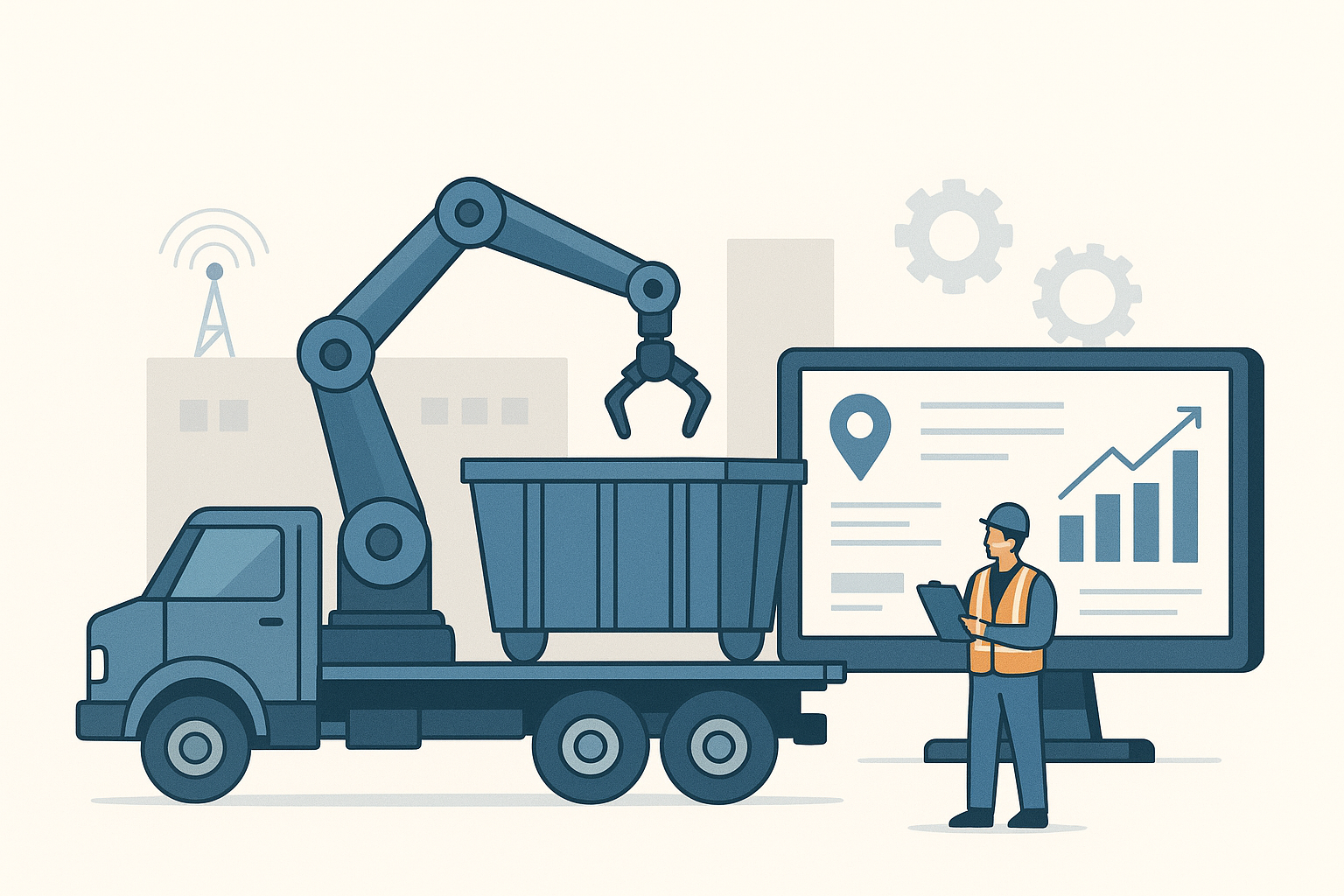
If you think about the dumpster rental industry, you might imagine a world of phone books, paper tickets stapled to a sun visor, and a dispatcher shouting commands over a crackling two-way radio. That went on for decades. It was a trade based on heavy manual labor, gut instinct, and an acceptance of administrative mess. But that picture is quickly becoming a relic. It’s a profound change, unfolding not through more muscle, but through smarter software. Automation in waste management is transforming the trash hauling industry, creating a new era of efficiency, profitability, and customer service previously unimaginable for local business owners.
This transformation is not about replacing the essential workers who make our communities safe and clean. Instead, it’s about giving them powerful tools to remove friction, reduce costly mistakes, and enable human talent to focus on productivity and developing customer relationships. At every stage of the process, technology streamlines the path from the moment a customer inquires about a bin to the moment they get an auto-generated invoice.
1: The Foundational Shift: From Clipboards to Cloud-Based Dumpster Rental Software
At the center of this revolution is a type of specialized business management tool commonly referred to as dumpster rental software, which is a waste hauling automation. Imagine this software as the central nervous system of a modern hauling company. It is a replacement for a mess of spreadsheets, paperwork, and sticky notes integrated into one cohesive digital platform.
Market leaders such as Trash Flow, WastePilot, and Haul-IT are designed to meet the special needs of roll-off and dumpster rentals. They integrate key processes in a single dashboard that offers a unified source of truth for the entire company. The essence of this software is that it essentially serves as a centralized command center that provides:
- Unified Customer Management
All customer interactions, from the initial quote through service history and personal notes (such as the gate code is 1234), can be accessed with one searchable customer profile. This avoids the panicked search of the client’s file when they call for an inquiry.
- Real-Time Asset Tracking
- It is essential to know the location and status of all dumpsters. This software is designed to help managers quickly determine whether a container is at the yard, on a truck, at a construction site, or needs maintenance. This visibility is the first step toward optimizing the entire fleet.
- Integrated Scheduling and Dispatch
The dispatchers no longer have a cluttered whiteboard full of magnets, but a digital board that shows all the pending jobs. They can drag and drop orders to allocate drivers, identify who is nearest to a new assignment, and track their progress instantly.
Combining these disparate functions, dumpster rental software eliminates the communication gaps and data silos that have plagued the industry traditionally and forms the foundation of further automation.
2: The Key Pillars of Automation in Action
The real strength of this central software platform lies in how certain time-intensive processes function. We will unpack five of the major areas that have undergone a significant change.
Automated Booking and Smart Dispatch Solutions.
The traditional system of renting was a game of phone tag. A customer would call, the office manager would check on a paper calendar, call the agent to see about the availability of bins, and then call back the customer- assuming they answered. It was a slow process that could be easily marred by double-booking and lost opportunities.
Automation has totally transformed this in two key aspects:
- 24/7 Online Booking Portals
Modern dumpster rental companies can offer a booking widget right on their website. This means that customers can browse container types, get real-time prices, select their rental dates, and book and pay for a dumpster at their convenience. For the business, its revenue is in the middle of the night on a Sunday without an employee lifting a finger. It also saves your staff a lot of time on the phone answering routine questions about availability and pricing.
- Automated Order-to-Dispatch Workflow
When you place an order online, it doesn’t just go to an inbox to be manually processed. It is automatically routed to the company’s dispatch queue, carrying all customer details. The dispatcher can then assign it with a few clicks to the best driver, considering their distance and current workload. Using the system’s live mapview, the company avoids overburdening any single driver and dispatches the nearest available driver, significantly reducing response times.
The Science of Efficient Routing: Beyond the Simple Map
Fuel and driver labor are two of the biggest and most unpredictable expenses in waste hauling. Inefficient routing, such as a driver crisscrossing the city or getting stuck in traffic, takes a toll on profit margins. Here is where advanced route planning for dumpster rentals makes all the difference.
This technology goes beyond a driver manually plugging stops into a Google Map. The software’s algorithm takes all scheduled jobs for the day (deliveries, pick-ups, landfill runs) and determines the most mathematically efficient sequence. It dynamically factors in a multitude of variables:
Live Traffic Conditions: The system connects with traffic information to avoid accidents, construction, and rush-hour traffic.
Job Type and Duration: It analyzes that a container drop-off is faster than a live load and haul to the disposal site, so it creates a realistic timeline.
Disposal Site Locations and Hours: It takes into account the location of landfills and transfer stations, their operation hours, and even potential waiting times.
The outcome is a turn-by-turn route directly sent to the driver’s mobile device that shortens driving time, saves on fuel, and enables each driver to do more work in a day. That not only improves the bottom line but also reduces the company’s environmental impact due to lower emissions.
3: Empowering the Field: The Rise of the Driver Mobile App
The driver is the most important link to the customer, and their efficiency is critical. Companion mobile apps that effortlessly connect with the cloud-based dispatch software have revolutionized field operations.
Provided with a company-issued smartphone or tablet, the drivers are no longer cut off from the office. Their mobile app becomes their command center, allowing them to:
- Access Digital Route Sheets
Their day begins with a list of jobs to do, including contact and customer addresses, and special instructions, instead of printed papers, which may be lost or damaged.
- Give Real-Time status updates.
One touch will allow a driver to change the status of a job to either ’En Route’, ’On Site ’, or ‘Completed’. This provides the office and the customer (through automated notifications) with real-time access to the job progress.
- Capture Digital Proof of Service
The most noticeable feature, perhaps, is that it allows taking geotagged, time-stamped pictures. A driver is able to take a photo of the dumpster placed to demonstrate delivery, or record a contaminated load or property damage at pickup. This visual evidence is automatically attached to the job order and can sort out possible customer disputes before they even start.
- Record Essential Job Data
Drivers can directly enter key data into the app, such as tonnage at a landfill weighbridge, collected material type, and any other charges. This ensures accurate data entry into the billing system without any transcriptions.
This free flow of information keeps drivers in control, alleviates their administrative burden, and gives the back office a degree of operational clarity never experienced before.
4: The End of Billing Nightmares: Automated Invoicing Software
For a lot of haulers, invoicing is a pain to deal with on a monthly basis. Determining rental time periods, applying weight tickets and adding overage fees, and processing late payments takes a lot of administrative work and is very prone to human error. Automated dumpster billing software puts an end to this chaotic process.
These systems establish a seamless “field to invoice” process to guarantee all services are billed correctly and on time.
- Data-Driven Billing
The driver in the mobile app collects the relevant data (rental duration, tonnage, extra fees for prohibited items or blocked access) that are automatically passed into the invoicing module. It removes the need for an office manager to read handwritten driver tickets or to manually enter information from weight slips, and it results in almost no transposition errors or missed charges. A study cited in an article on automation in Waste Advantage Magazine revealed that companies that employed automated invoicing systems such as “Trash Fl,” retrieved an average of 8-12% of lost revenue that had been overlooked in the form of overage fees or rental extensions.
- Flexible and Complex Billing Models
The software has the flexibility to accommodate a wide variety of billing situations in the industry. You can even run long-term commercial contracts with recurring invoices, apply weight-based pricing with tare weights deducted automatically, and produce one-off invoices for residential users – all without lifting a finger to do any calculations.
- Accelerated Cash Flow
Integrated online payment systems enable customers to be emailed their invoice and pay it immediately with a credit card or ACH bank transfer in a secure customer portal. As a result, collection becomes a matter of days instead of weeks, improving cash flow and liberating staff from the tedium of printing, mailing, and chasing past-due payments.
5: Gaining Total Asset Control and Insightful Analytics
A dumpster rental company’s inventory is what keeps it alive. Misplaced, underused, or damaged containers are a direct revenue drain. Automation gives a lucid, real-time view of this important asset pool.
Asset management companies can track every container with a unique ID number. The system records the location (often GPS coordinates obtained from the driver’s app), current status (e.g., available, in use, at the shop for repair), and complete service history. This level of granularity visibility allows management to:
- Maximize the utilization of assets by detecting container inactivity.
- Proactive maintenance can now be scheduled based on usage, which helps to avoid expensive breakdowns and to maximize the asset’s lifespan.
- Find any particular container in a yard or at a job site, instantly saving time on manual searching.
- Generate powerful reports on profitability per container, helping to make data-driven decisions about fleet composition and retirement.
6: The Tangible Bottom-Line Benefits for Hauling Businesses
The investment in automation has proven to be worthwhile with an incredible ROI that impacts every aspect of the business.
- Significant Time Savings
Business owners consistently say they save 15-20 hrs/week just on administrative tasks by automating scheduling, dispatching, and billing. It allows owners and managers to regain their most precious resource – time to concentrate on strategic growth and sales.
- Significant Cost Reduction
The combination of route planning efficiency and bill automation efficiency results in a massive operational cost punch. Efficient routes mean you spend less on fuel, vehicle maintenance, and your fleet experiences less wear and tear. In parallel, the system-generated invoicing guarantees that all billable services and usage are effectively billed, recouping income that was previously lost due to manual miscalculations.
- A Superior Customer Experience
Automation enables a small hauler to deliver a customer experience that can easily rival large national companies. Customers are sent automated booking confirmation emails, timely driver ETA notifications, and have the convenience of easy online payment options. This professional yet communicative approach inspires confidence and ensures long-term loyalty.
- Informed Strategic Decision-Making
With all the operational data in one place, owners can move beyond guesswork. They can run detailed reports to see which customers they are earning the most money from, run analyses on particular routes, and determine the real cost and revenue associated with each container in their fleet.
7: Implementing Automation: A Practical Guide for Haulers
Implementing this new technology should be planned. The market has multiple solid platforms; the best one depends on the size and needs of your company. When considering options, it is important to:
- Identify Pain Points: Is scheduling, routing, driver communication, or billing the area you need the most help with? Prioritize the software that performs best in your weakest areas.
- Demand Integration: Ensure the platform can work with the tools you already use, most importantly, your accounting software (such as QuickBooks) and your website for online bookings.
- Team Involvement: Get your dispatchers and drivers on board. They are the end users, and their opinion is invaluable on the software’s ease of use.
- Take Advantage of Free Trials: The majority of reputable providers have live demos and trial periods free of charge. Take this chance to use the software in your real-world scenario before you buy.
The Future is Automated and Connected
The dumpster rental industry is being reshaped. Automation adoption is not a luxury for the largest companies in the industry; it’s an obligation if they want to keep up. Using dumpster dispatch software, route optimization, mobile driver apps, and automated invoicing, independent haulers can run a tight ship that enables them not only to compete but to win.
With this technology, they are enabled to create stronger, more profitable, and customer-focused businesses to show that in today’s market, the greatest tool to invest in when waste management isn’t a bigger truck, it’s a better system.
FAQs
Q: How will I know when my dumpster is arriving?
We are always happy to communicate in a proactive manner. When your driver is on the way, our system will automatically send you a notification via text or email that includes an estimated time of arrival (ETA). No more guessing or waiting around all day.
Q: What happens if there is an issue with my delivery or pickup, like a problem accessing the site?
Our drivers stay connected to our office in real time. If there’s a problem, they can instantly update the job status and alert our dispatchers. We’ll get back to you right away to take care of the situation so we can get you back up and running.
Q: My business needs recurring dumpster service. Can you automate that?
Yes. We focus on establishing automated recurring service schedules for our commercial customers. You determine the pickup frequency (e.g., weekly, bi-weekly), and our system will automatically create the jobs, dispatch the drivers, and invoice you, so you’ll never miss a service. This “set it and forget it” method saves you time on the administrative end.